Tides in our Solar System and beyond
le 25 septembre 2026, 10h45 à 12h45, Aurélie Astoul, salle Jules Verne, OMP, site Belin
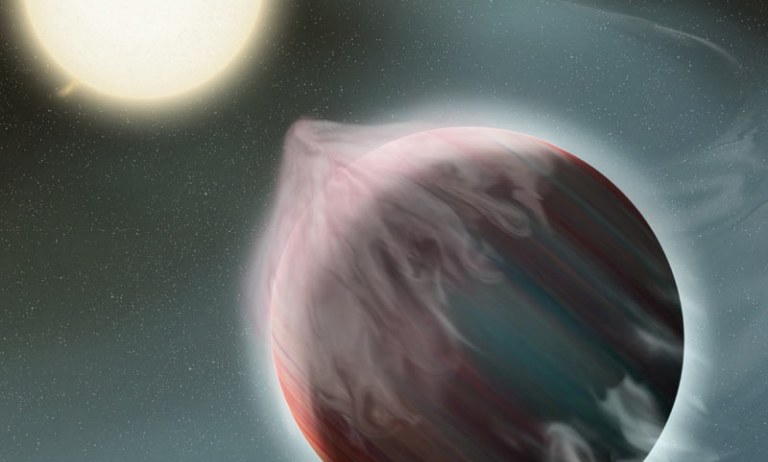
Summary: On Earth, tides are well-known to cause the ebb and flow of seas and oceans. This phenomenon is due to the gravitational action of the Moon and Sun on large volumes of terrestrial fluids. In our Solar system, tidal interactions can be strong enough to produce faults, tectonic activity and volcanism, like in Jupiter’s and Saturn’s closest moons. Over long timescales, these tidal deformations and dissipative processes drive orbital and rotational evolution through angular momentum redistribution. As an example, the Moon always presents the same face to us as a consequence of tidal synchronisation of its orbital and rotational periods. Tidal effects are also of particular interest in others planetary systems, since most currently detected exoplanets orbit their host stars within distances comparable to or smaller than Mercury’s orbit. In this seminar, I will explain how tides impact not only a satellite, a planet, or even a star, but also the whole architecture of tight systems.