La naissance des éléments, du Big-Bang à la Terre : un siècle d’avancées scientifiques

Le 3 octobre 2025, Sylvie Vauclair, 10h45 à 12h45, Salle Jules Verne, OMP, site Belin

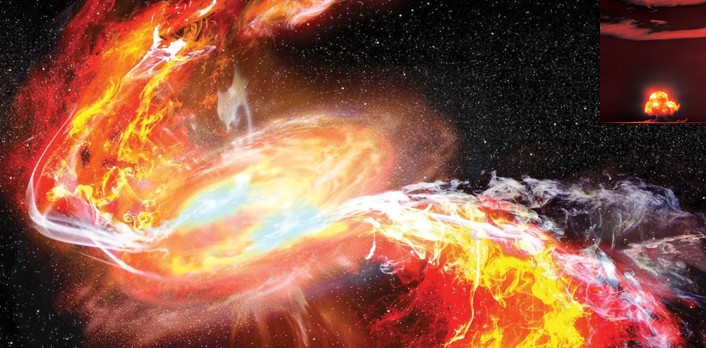
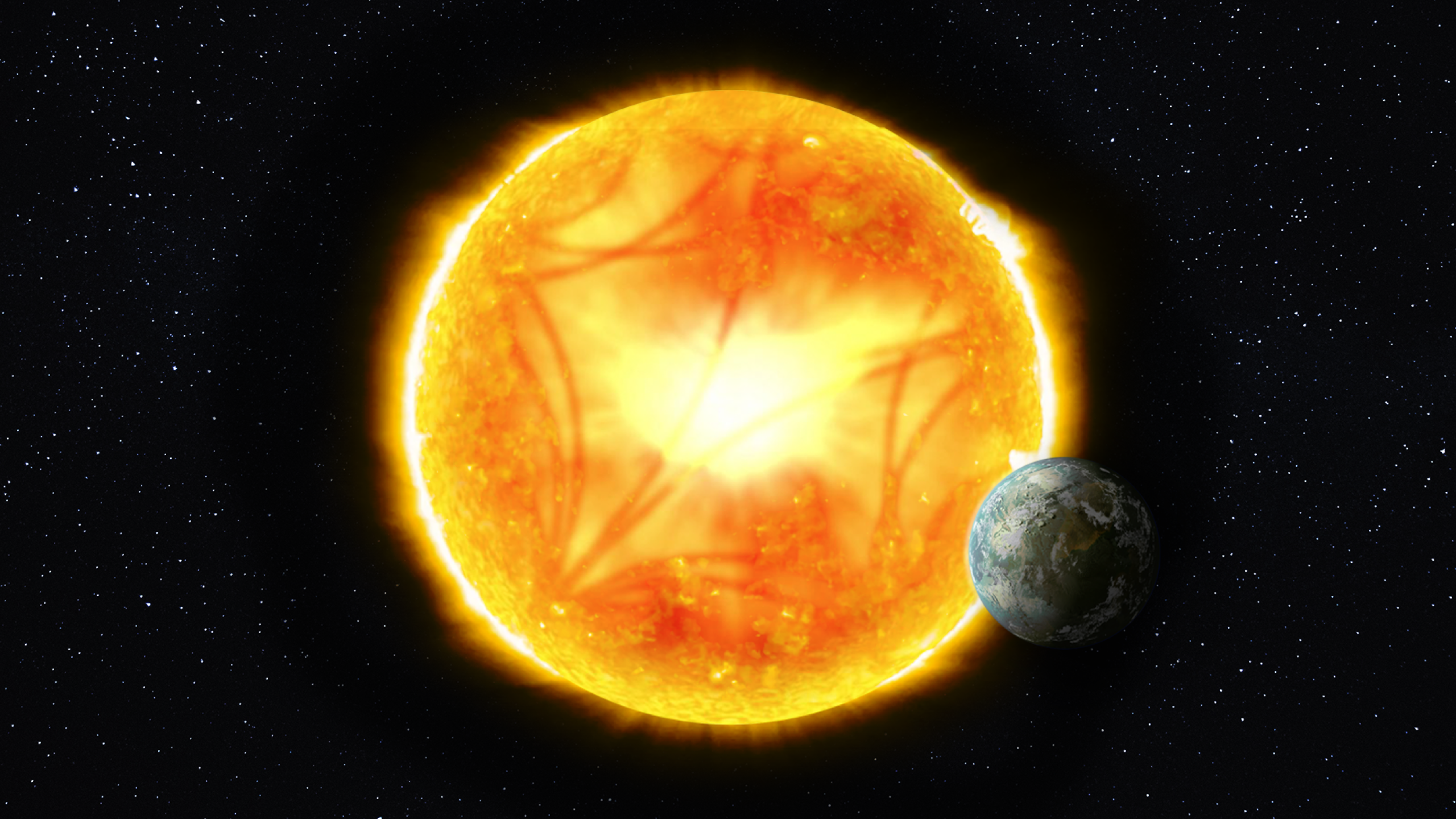
Summary: Since the beginning of the 20th century, the scientific knowledge on the formation of the chemical elements in the Universe, from Big-Bang to Earth, have evolved in spectacular manner, thanks to close interconnections between atomic physics, « sub-atomic » and then nuclear physics, and astrophysics. The close link between the energy produced in stars and the formation of heavy elements, the computations of the first nuclear reactions rates, the important advances induced by the preparation of the « atomic bomb », and many other steps, including the recent discovery of neutron star collisions, led to a general achievement, giving access to the origin, or rather the origins, of most elements of Mendeleev’s periodic table.

Plus d'actualités

Measuring distances in astrophysics

le 4 septembre 2026, 10h45 à 12h45, Katia Ferrière, salle Jules Verne, OMP, site Belin Summary: I will take you on a cosmic journey from the Earth to the far reaches of the observable Universe. We will first spend some time in the solar system, where I will show how the radius of the Earth […]

A Universe of Waves

le 11 septembre 2026, 10h45 à 12h45, Arturo Lopez-Ariste, salle Coriolis, OMP, site Belin Summary: The phase of a wave can only be defined unambiguously for complex waves. This strange quantity appears at the core of all physics: from the quantification of atomic levels or of the electric charge to the source of the electromagnetic […]

Finding new and extreme objects in the Universe

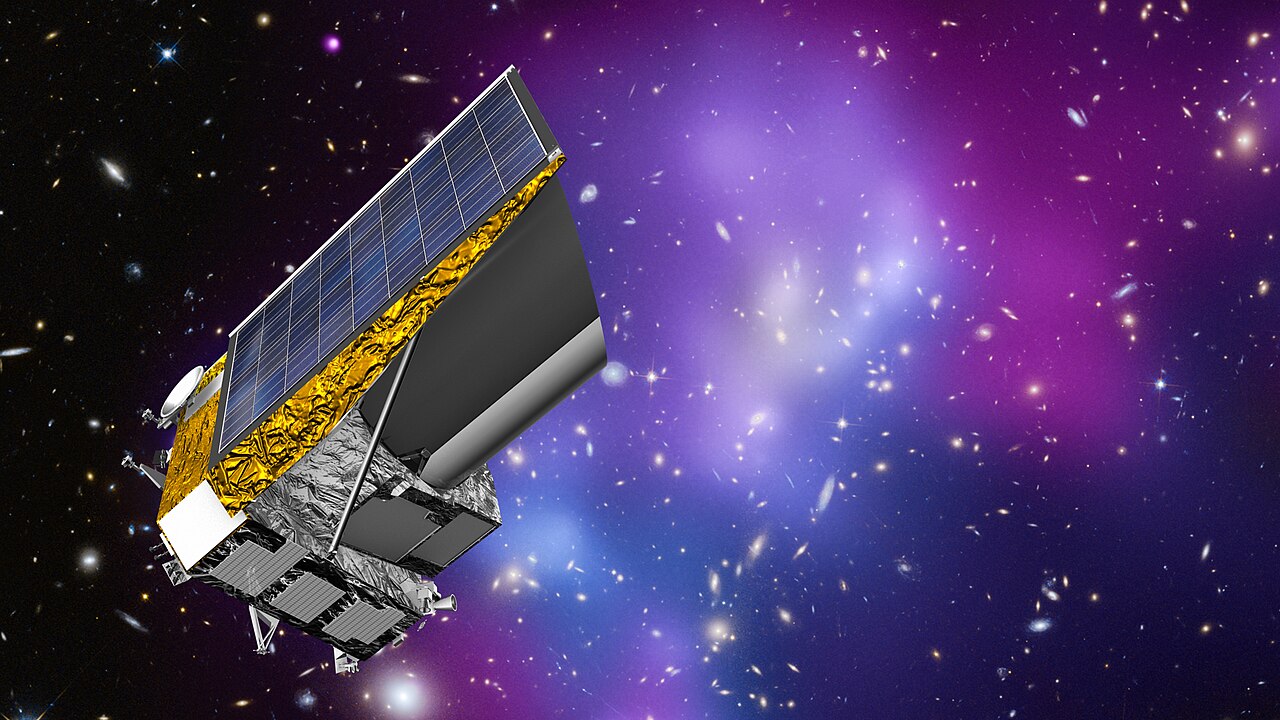
le 18 septembre 2026, 10h45 à 12h45, Natalie Webb, salle Jules Verne, OMP, site Belin Summary: Thanks to large surveys such as those carried out with Gaia, Pan-STARRS, the Sloan Digital Sky Survey (SDSS), 2MASS, NVSS, XMM-Newton and Chandra, we have catalogued many stars and galaxies, as well as exotic objects, especially when we observe […]

Rechercher