Highlights from the Planck mission Marta Alves

le 11 déc 2015 de10h00à 12h002015/12/11 2015/12/11
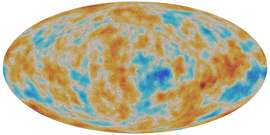
Crédit : ESA

The Planck satellite was launched in 2009 and observed the sky at microwave and infrared frequencies during 4.5 years. Planck was the third generation space mission to measure the anisotropies of the cosmic microwave background (CMB), after the COBE and WMAP satellites. Accordingly, it provided a map of the CMB anisotropies at unprecedented resolution and sensitivity, from which an updated set of cosmological parameters was derived. Notably, the weak CMB signal was extracted from the Planck multi-frequency maps that are completely dominated by emission from our own Galaxy. So finally Planck was also a powerful instrument for Galactic and extragalactic astrophysics. I will review some of the major results from the Planck mission, from the CMB to the Galactic interstellar medium, with a special focus on the new all-sky polarization observations.

Plus d'actualités

Measuring distances in astrophysics

le 4 septembre 2026, 10h45 à 12h45, Katia Ferrière, salle Jules Verne, OMP, site Belin Summary: I will take you on a cosmic journey from the Earth to the far reaches of the observable Universe. We will first spend some time in the solar system, where I will show how the radius of the Earth […]

A Universe of Waves

le 11 septembre 2026, 10h45 à 12h45, Arturo Lopez-Ariste, salle Coriolis, OMP, site Belin Summary: The phase of a wave can only be defined unambiguously for complex waves. This strange quantity appears at the core of all physics: from the quantification of atomic levels or of the electric charge to the source of the electromagnetic […]

Finding new and extreme objects in the Universe

le 18 septembre 2026, 10h45 à 12h45, Natalie Webb, salle Jules Verne, OMP, site Belin Summary: Thanks to large surveys such as those carried out with Gaia, Pan-STARRS, the Sloan Digital Sky Survey (SDSS), 2MASS, NVSS, XMM-Newton and Chandra, we have catalogued many stars and galaxies, as well as exotic objects, especially when we observe […]

Rechercher