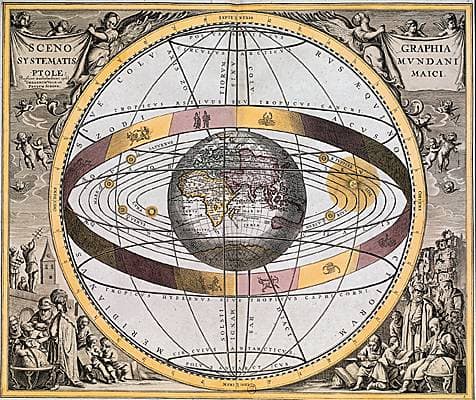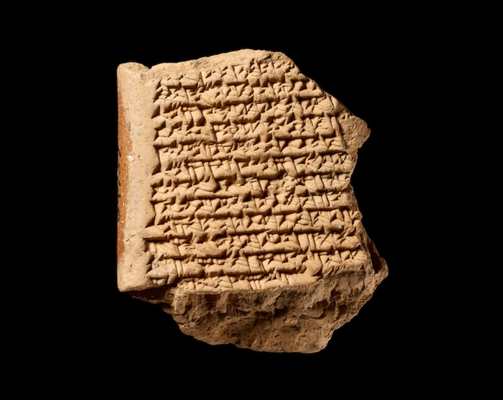
The first astronomical databases (700 BC – 100 BC): Babylonian systems and Hipparcus’ works.

le 18 novembre 2022, 11h à 13h, Guillaume Loizelet, salle Jules Verne, OMP, site Belin

It is not possible to develop a mathematical model without a reliable and consistent database.
In this session, I will first detail the cultural context that led the Babylonian « astronomers » to establish formidable data collections in the form of clay tablets. Then I will briefly present the so-called System A and System B developed during the second half of the first millennium BC to account for the a priori erratic movements of the five planets observable with the naked eye.
Finally, I will conclude this session with a presentation of what is known about the work of Hipparchus, and in particular his catalogue of fixed stars.


Plus d'actualités

Measuring distances in astrophysics

le 4 septembre 2026, 10h45 à 12h45, Katia Ferrière, salle Jules Verne, OMP, site Belin Summary: I will take you on a cosmic journey from the Earth to the far reaches of the observable Universe. We will first spend some time in the solar system, where I will show how the radius of the Earth […]

A Universe of Waves

le 11 septembre 2026, 10h45 à 12h45, Arturo Lopez-Ariste, salle Coriolis, OMP, site Belin Summary: The phase of a wave can only be defined unambiguously for complex waves. This strange quantity appears at the core of all physics: from the quantification of atomic levels or of the electric charge to the source of the electromagnetic […]

Finding new and extreme objects in the Universe

le 18 septembre 2026, 10h45 à 12h45, Natalie Webb, salle Jules Verne, OMP, site Belin Summary: Thanks to large surveys such as those carried out with Gaia, Pan-STARRS, the Sloan Digital Sky Survey (SDSS), 2MASS, NVSS, XMM-Newton and Chandra, we have catalogued many stars and galaxies, as well as exotic objects, especially when we observe […]

Rechercher